Insights & Stories
Discover the latest strategies, tutorials, and updates from the Amartable team to elevate your digital presence.
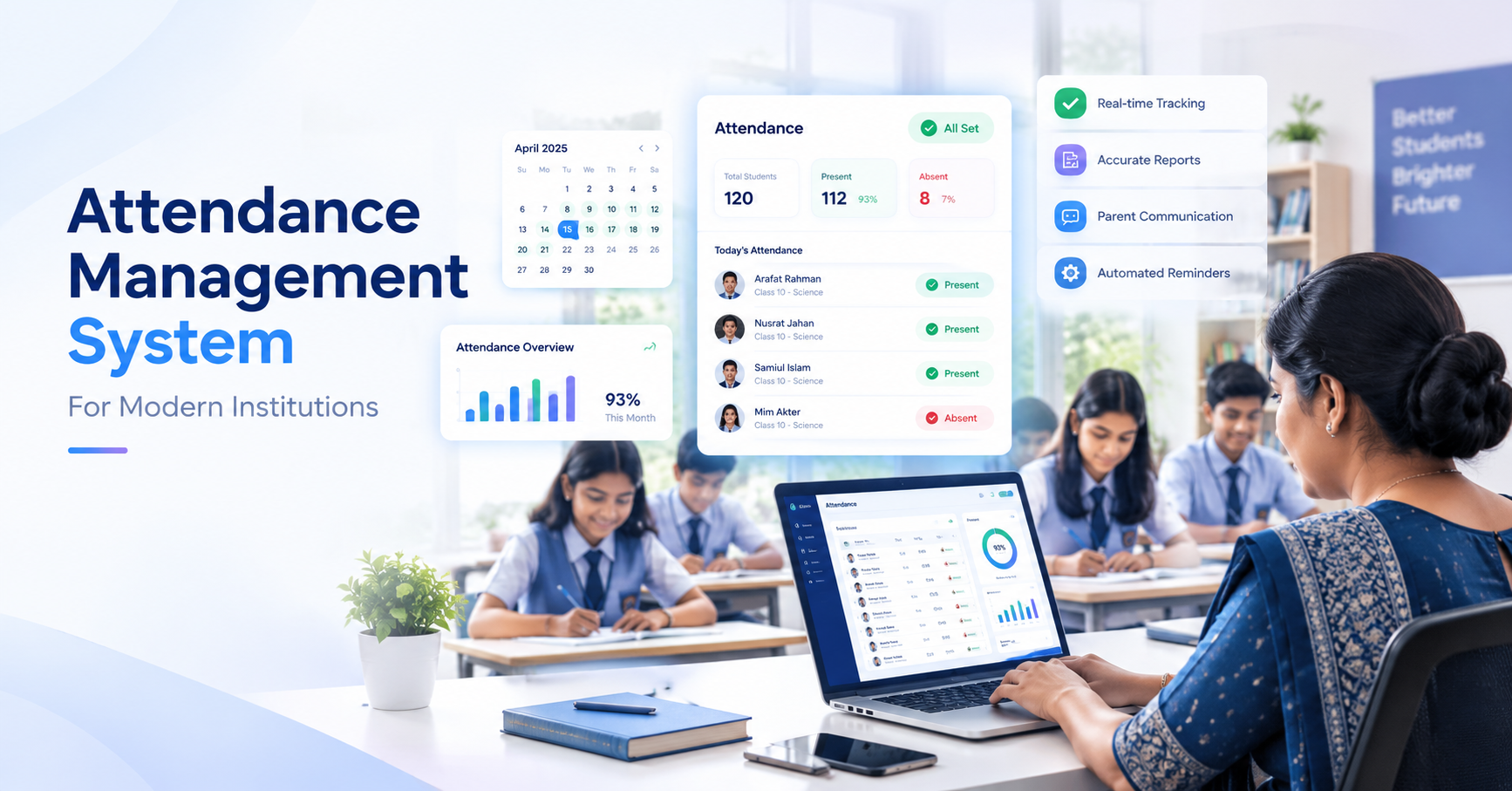
Attendance Management System for Modern Institutions
Managing attendance manually is outdated and inefficient. An attendance management system helps institutions automate tracking, reduce errors, and gain real-time insights for better decision-making.
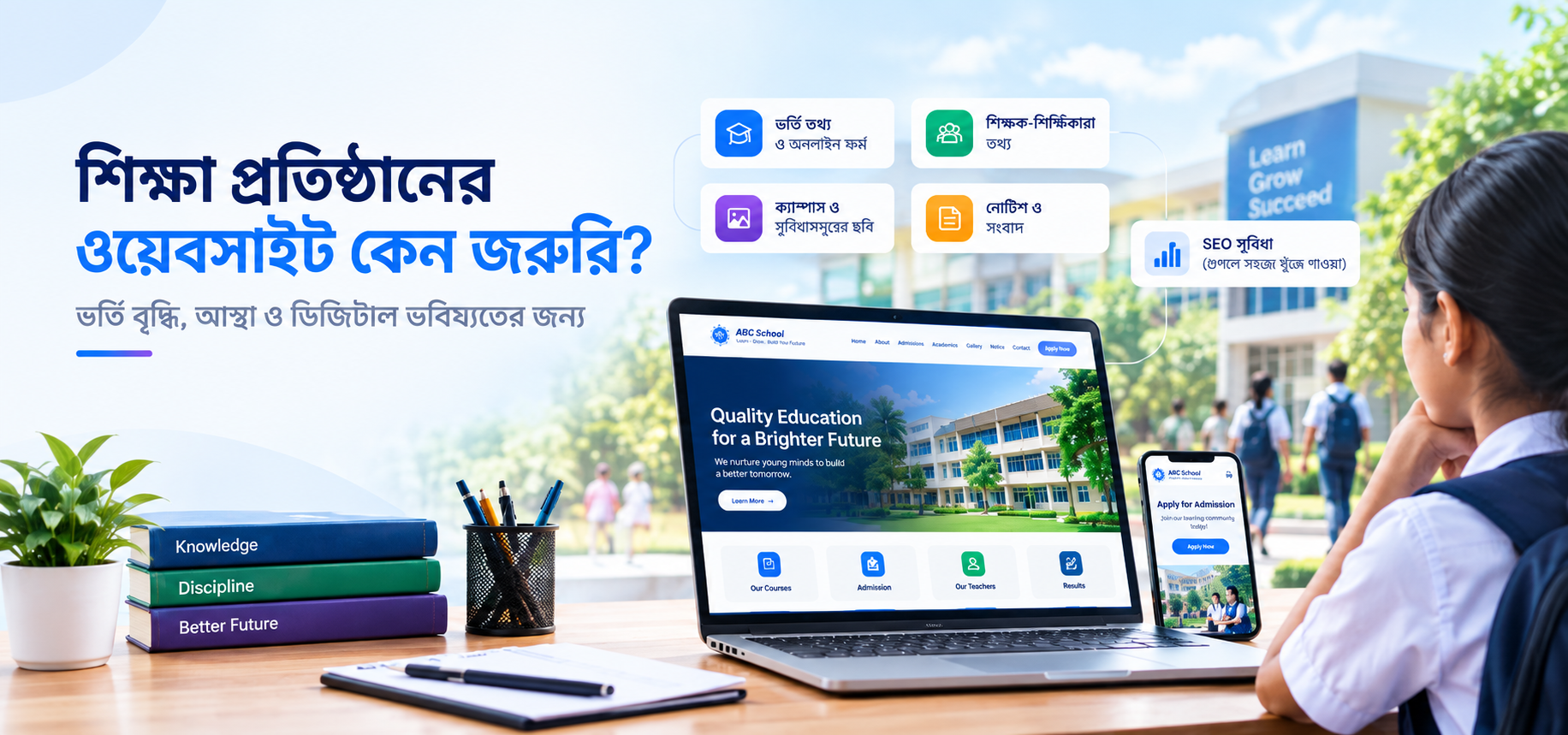
কেন প্রতিটি শিক্ষা প্রতিষ্ঠানের একটি প্রফেশনাল ওয়েবসাইট থাকা জরুরি
বর্তমান প্রতিযোগিতামূলক সময়ে একটি প্রফেশনাল ওয়েবসাইট শিক্ষা প্রতিষ্ঠানের জন্য অত্যন্ত গুরুত্বপূর্ণ। এটি ভর্তি বৃদ্ধি, অভিভাবকদের আস্থা তৈরি এবং সহজ যোগাযোগ নিশ্চিত করে। এই ব্লগে জানুন কেন আপনার প্রতিষ্ঠানের এখনই একটি ওয়েবসাইট প্রয়োজন।
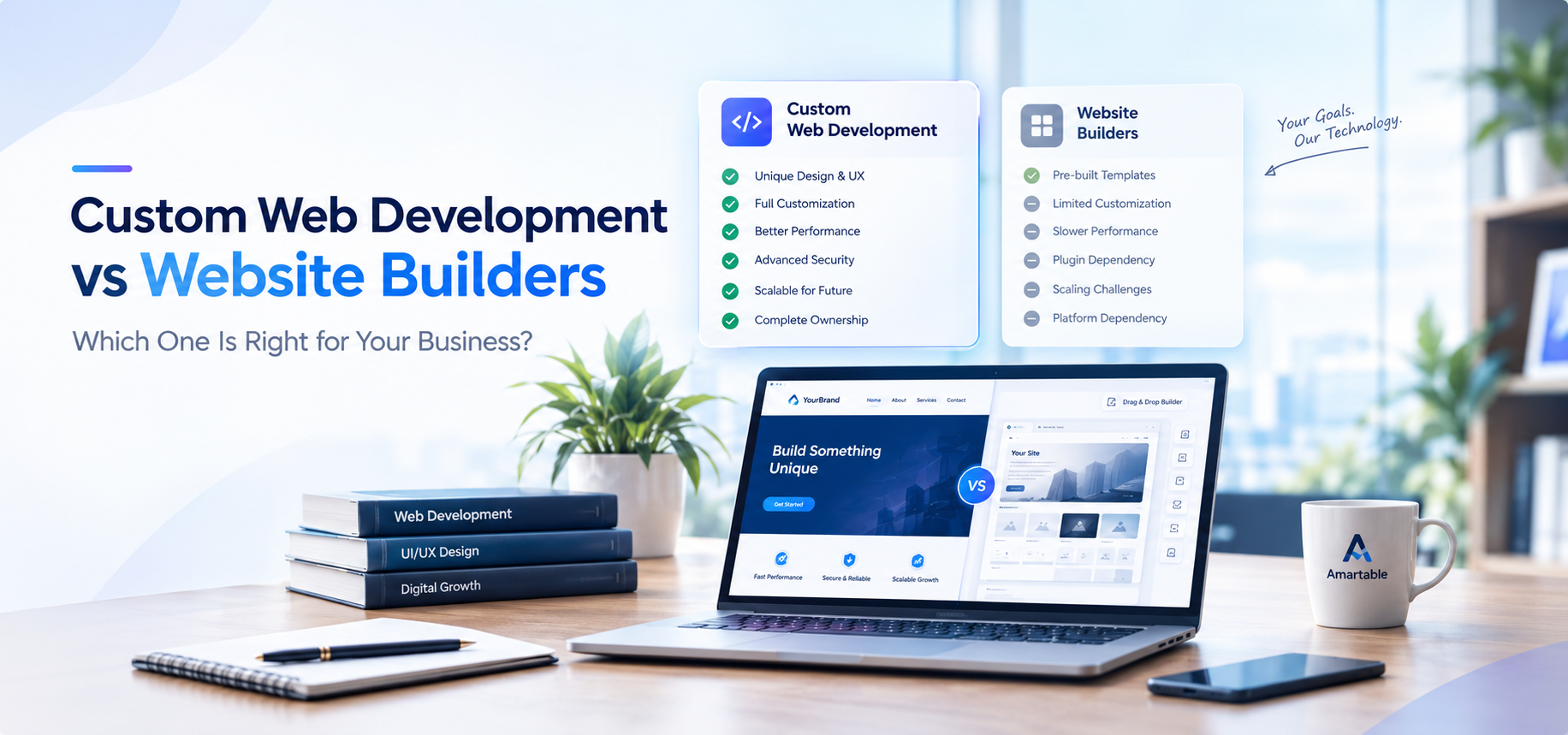
Custom Web Development vs Website Builders – Which Is Better?
This guide compares performance, SEO, scalability, security, and long-term ROI to help you make the right decision for your business in 2026.
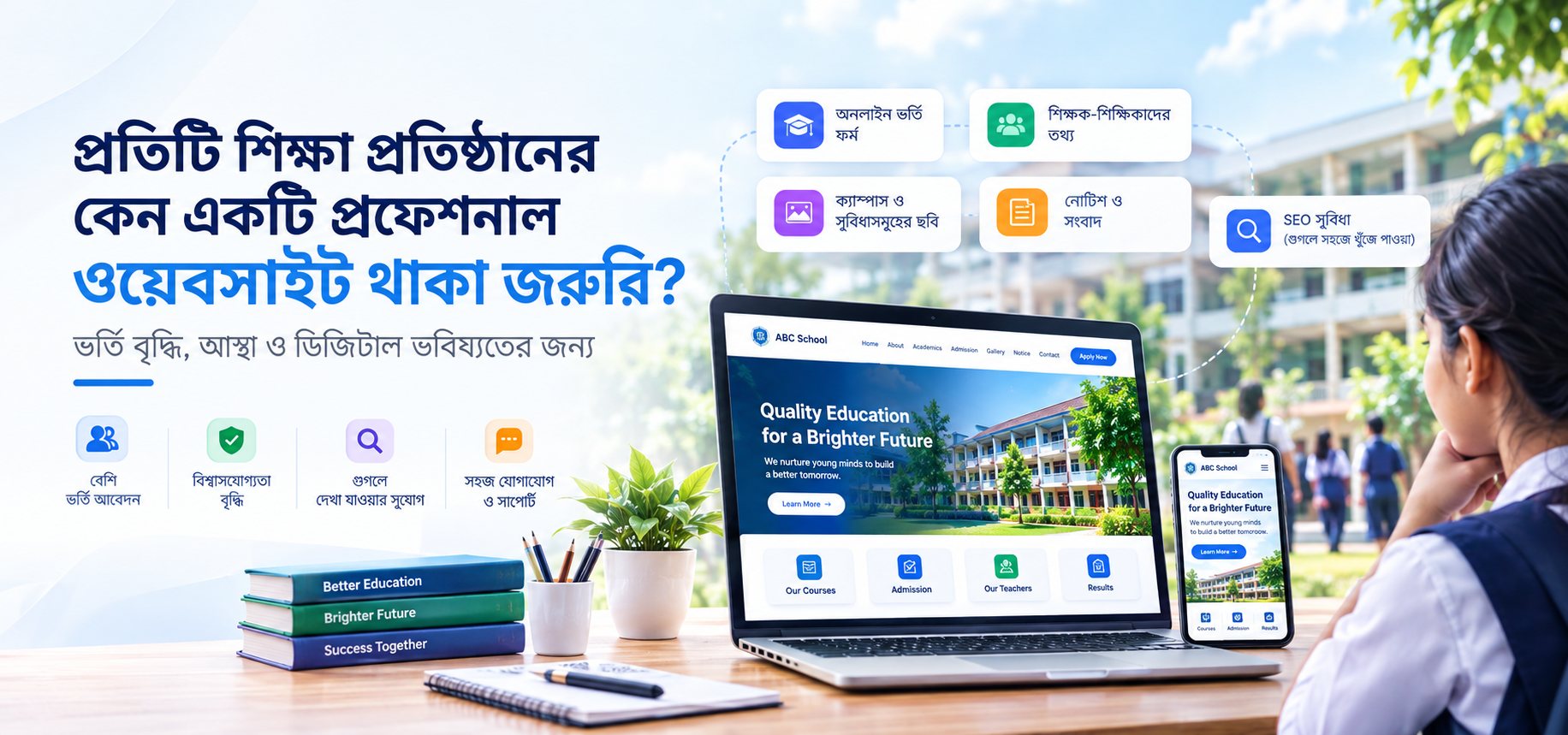
Why Every Educational Institute Needs a Professional Website in 2026
In today’s competitive education sector, a professional website is no longer optional. It builds credibility, increases admission inquiries, improves parent communication, and helps institutes rank on Google. Discover why every educational institute needs a website in 2026.
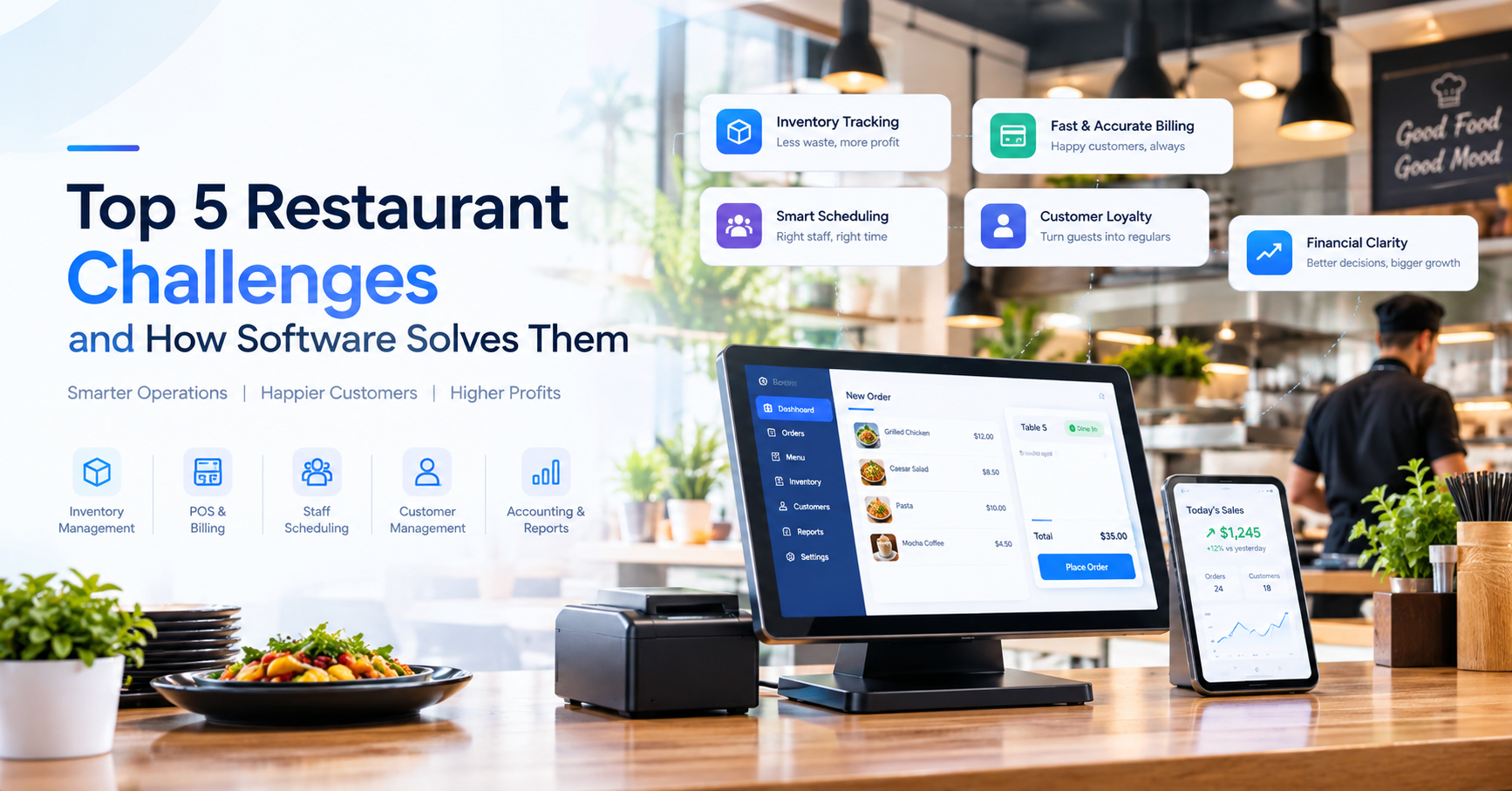
Top 5 Restaurant Challenges and How Software Solves Them
Running a restaurant comes with its share of challenges, from managing inventory to delivering exceptional customer service. The good news is that restaurant management software can make a significant difference.
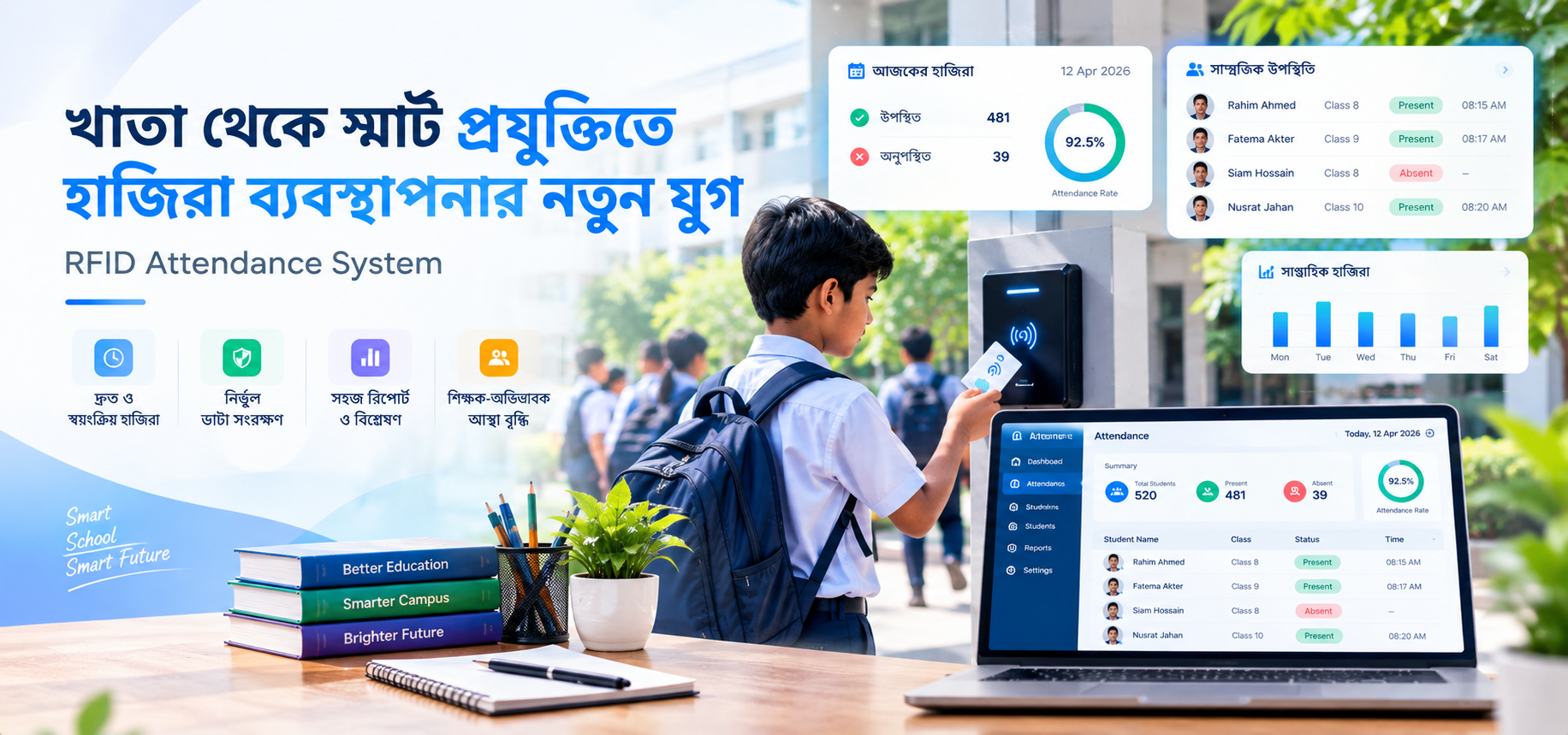
খাতা থেকে স্মার্ট প্রযুক্তিতে হাজিরা ব্যবস্থাপনার নতুন যুগ
RFID Attendance System দিয়ে স্কুলের হাজিরা ব্যবস্থাপনা হোক দ্রুত, নির্ভুল ও সম্পূর্ণ ডিজিটাল। স্মার্ট স্কুল গঠনের জন্য আধুনিক ও কার্যকর সমাধান।

Risks of AI Technology: Opportunities and Challenges Explained
Artificial Intelligence introduces risks like job displacement, bias, and privacy concerns.
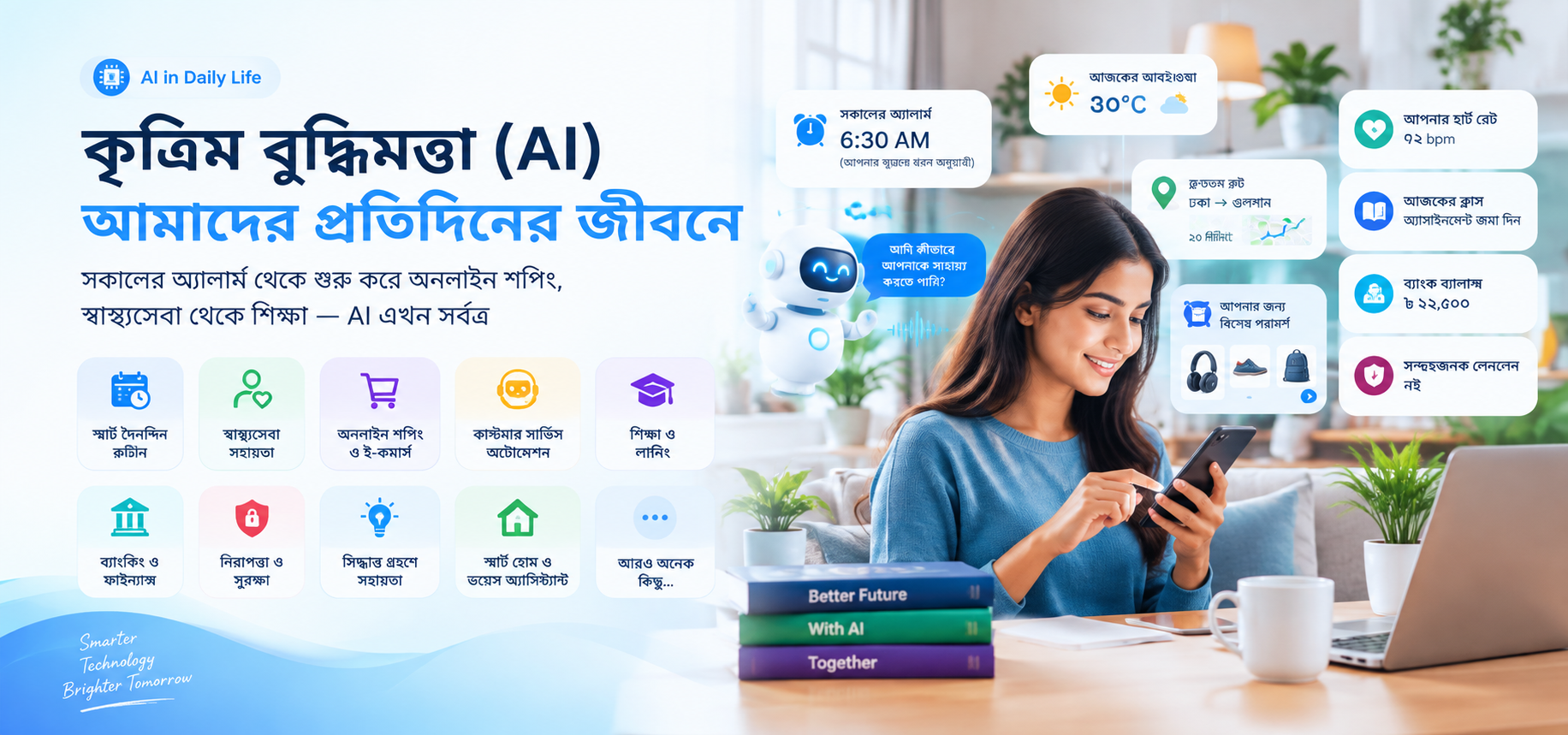
AI in Daily Life: How Artificial Intelligence Shapes Our Everyday Activities
Artificial Intelligence is no longer a future concept. From smartphones to healthcare, AI is quietly transforming daily life by improving convenience, efficiency, and decision-making.
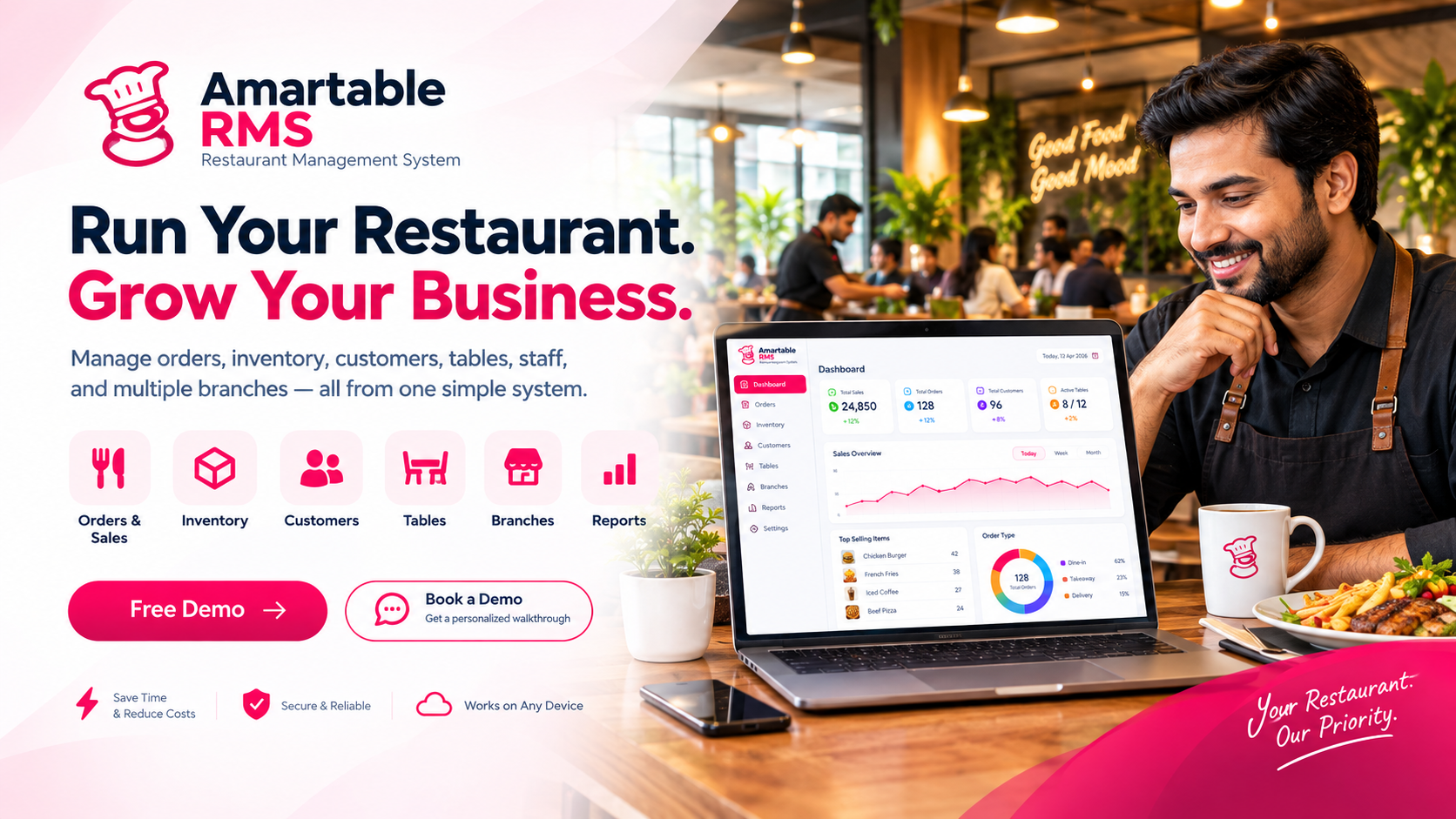
Smart Restaurant Management Made Simple
Amartable RMS is an all-in-one restaurant management solution that helps restaurants manage orders, tables, billing, vendors, and analytics efficiently from a single platform.
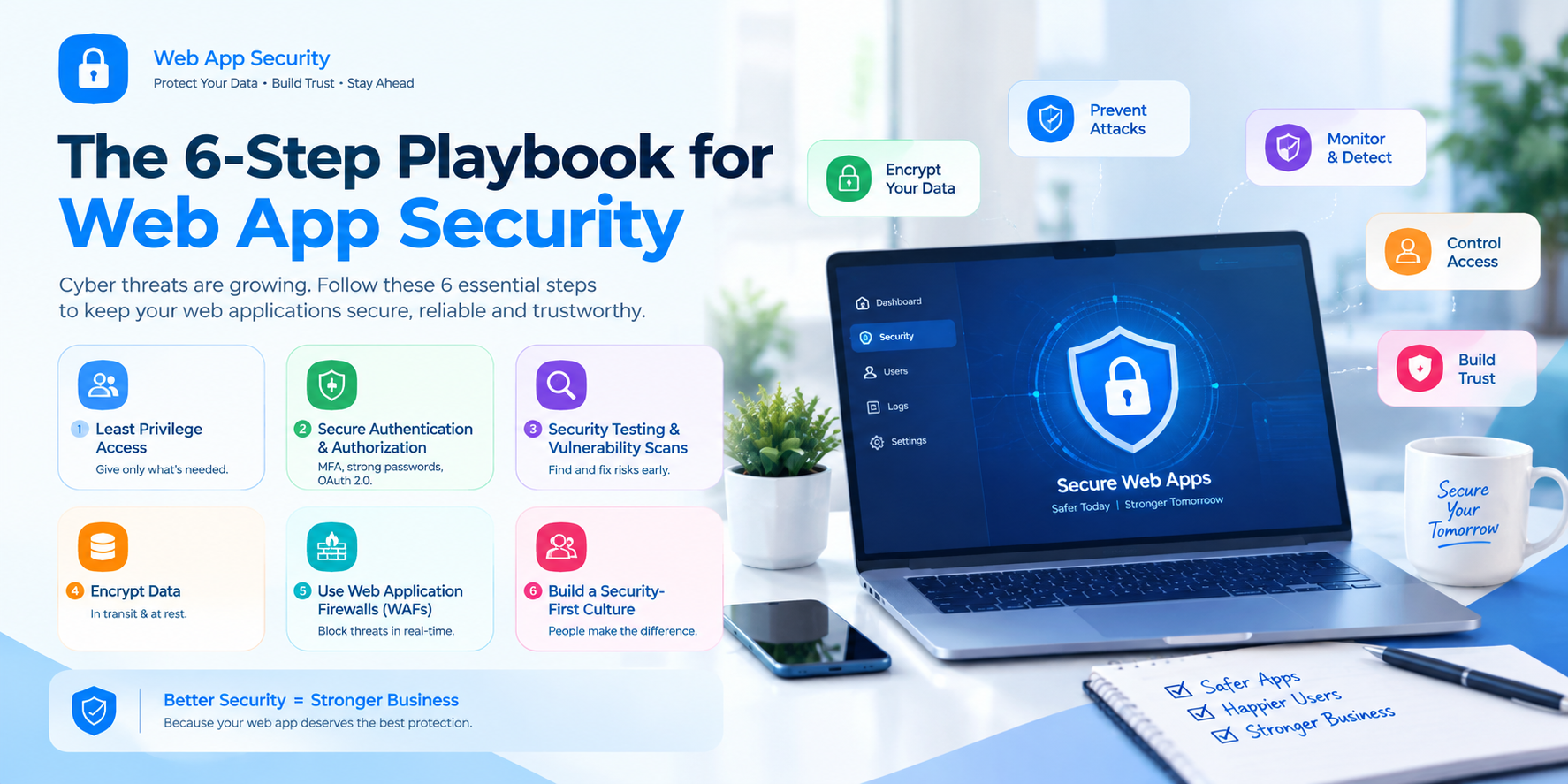
The Web App Security Playbook: 6 Practices Every Business Should Follow
IntroductionWeb apps are the backbone of corporate operations in today's digital-first economy. Web apps are essential to businesses' ability to handle data and provide services, from e-commerce platforms to SaaS plans. However, this dependence raises the possibility of cyberattacks. In addition to compromising private data, inadequate web app security undermines consumer confidence and harms a brand's reputation.To guarantee that their applications stay safe, reliable, and trustworthy, this playbook lists six essential steps that any company, regardless of size, should follow.1. Embrace the Principle of Least PrivilegeOne of the most overlooked yet powerful security measures is the principle of least privilege (PoLP). This concept means giving users and applications only the permissions they need to perform their tasks—nothing more.Limit access rights for employees, contractors, and apps.Regularly audit user roles and permissions.Implement role-based access control (RBAC) to minimize exposure. Why it matters: Restricting unnecessary access significantly reduces the attack surface for potential breaches.2. Secure Authentication and AuthorizationAuthentication is the frontline defense for Web App Security. Weak login mechanisms make it easy for attackers to infiltrate systems.Best practices include:Enforcing multi-factor authentication (MFA) for all users.Using strong password policies with regular updates.Implementing OAuth 2.0 and OpenID Connect for secure session handling.Pro Tip: Always monitor for unusual login patterns, as these may indicate a brute force or credential-stuffing attack.3. Regular Security Testing and Vulnerability ScansWeb applications are dynamic, with frequent updates and integrations. Each update could unintentionally introduce vulnerabilities.Key steps to follow:Conduct penetration testing at least quarterly.Use automated vulnerability scanners for continuous monitoring.Patch and update frameworks, plugins, and dependencies regularly.Common Web App Vulnerabilities & MitigationVulnerabilityRisk LevelPrevention StrategySQL InjectionHighUse parameterized queries & ORM toolsCross-Site Scripting (XSS)HighInput validation & output encodingCSRF AttacksMediumCSRF tokens & same-site cookiesBroken AuthenticationHighMFA, session timeout, secure cookie flagsInsecure APIsHighStrong authentication, API gateways 4. Encrypt Data in Transit and at RestEncryption ensures that even if data is intercepted, it remains unreadable to unauthorized parties.Use TLS/SSL certificates for all web traffic.Encrypt sensitive data (customer details, financial information) at the database level.Store keys securely with Hardware Security Modules (HSMs) or cloud key management services.Why encryption matters: It’s not just about compliance (GDPR, HIPAA, PCI-DSS), but also about safeguarding customer trust.5. Implement Web Application Firewalls (WAFs)A Web Application Firewall is a shield between your app and the internet. It filters malicious traffic while allowing legitimate requests.Benefits of WAFs:Blocks SQL injections and XSS attacks in real-time.Detects and mitigates Distributed Denial of Service (DDoS) attempts.Provides detailed traffic logs for forensic analysis.Pro Tip: Opt for a cloud-based WAF for scalability and reduced latency.6. Foster a Security-First CultureTechnology alone isn’t enough. Human error remains one of the biggest causes of security breaches.Steps to build a security-first culture:Conduct regular security awareness training.Encourage employees to report phishing attempts.Establish clear incident response protocols.Promote a shared responsibility mindset across teams.Why it matters: A strong culture of security reduces risks and ensures rapid response in case of an incident.FAQs About Web App SecurityQ1. Why is Web App Security important for small businesses?Ans: Even small businesses are targets because attackers often see them as "low-hanging fruit" with weaker defenses. Web App Security protects customer data and ensures business continuity.Q2. How often should I conduct security testing?Ans: At minimum, quarterly. However, continuous monitoring with automated tools is recommended for real-time protection.Q3. Are cloud-based apps more secure than on-premise apps?Ans: Not inherently. Security depends on proper configurations, access controls, and vendor practices. Shared responsibility is key.Q4. What’s the first step if my web app is breached?Ans: Immediately isolate the affected systems, notify stakeholders, analyze logs, and implement incident response protocols. Follow with a forensic investigation.ConclusionThe digital landscape is evolving rapidly, and cyber threats are keeping pace. Businesses that fail to invest in Web App Security not only risk losing data but also customer trust and long-term revenue. By following this six-step playbook—covering least privilege, authentication, testing, encryption, WAFs, and security culture—you build a strong defense against modern cyber risks.For further insights, explore resources from OWASP, a trusted authority in application security.
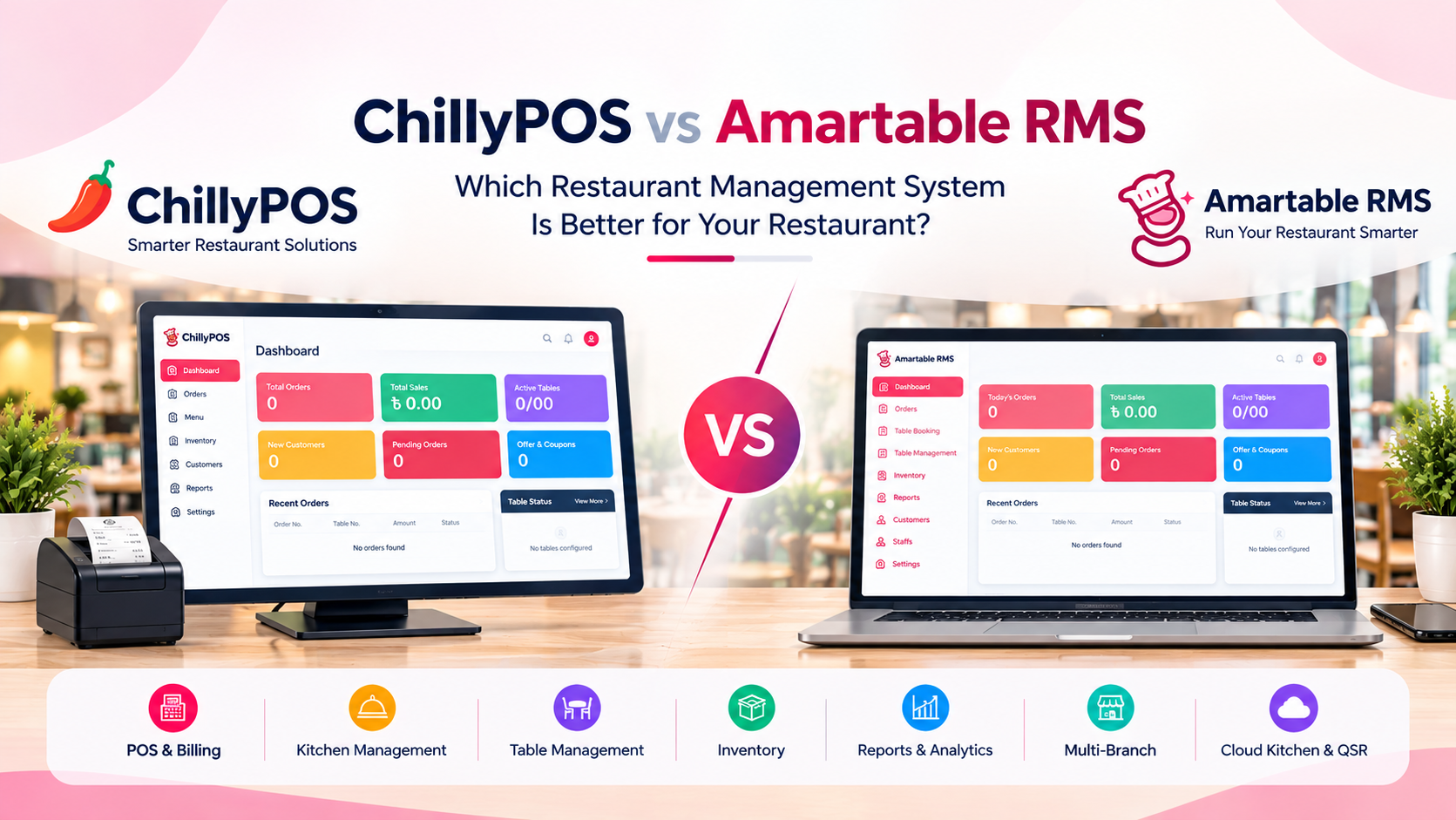
ChillyPOS vs Amartable RMS: Which Restaurant Management System Is Better?
ChillyPOS vs Amartable RMS: Which Restaurant Management System Is Better? Running a restaurant is not just about serving great food. Restaurant owners also need to manage orders, tables, kitchen operations, inventory, employees, payments, sales, and daily expenses. When these tasks are managed manually, mistakes can happen easily. Orders can be missed, inventory can become difficult to track, billing can take longer, and restaurant owners may not have a clear view of their business performance. That is why a good Restaurant Management System (RMS) or POS software has become an important part of modern restaurant operations. There are several restaurant software solutions available in Bangladesh. Two options that restaurant owners may consider are ChillyPOS and Amartable RMS. Both systems are designed to help restaurants manage their daily operations, but they have different strengths and approaches. In this guide, we will compare ChillyPOS vs Amartable RMS and explain what restaurant owners should consider before choosing a restaurant management system. ChillyPOS vs Amartable RMS: Quick Comparison Feature ChillyPOS Amartable RMS POS & Billing Yes Yes Order Management Yes Yes Kitchen Management Yes Yes Table Management Yes Yes Inventory Management Yes Yes Sales Reports Yes Yes Multi-Branch Management Yes Yes Online Ordering Yes Yes QR Ordering Yes Available based on setup AI-Powered Insights Yes Focus on operational management Offline POS Not prominently highlighted No Cloud Kitchen Support Yes Yes QSR Support Yes Yes Multi-Branch Operations Yes Yes The exact features and availability can depend on the selected plan and business requirements. Restaurant owners should confirm the latest features with the provider before making a final decision. What Is ChillyPOS? ChillyPOS is a restaurant POS platform designed to help restaurants manage different parts of their business from one system. Its features cover areas such as POS orders, kitchen operations, customer management, table management, inventory, accounting, reporting, online ordering, and multi-branch management. One of the main points highlighted by ChillyPOS is its focus on AI-powered restaurant insights. AI-based analysis can help restaurant owners understand sales trends, customer behavior, food performance, and other areas of the business. This can be useful for restaurant owners who want to combine traditional POS features with data-driven business insights. What Is Amartable RMS? Amartable RMS is a restaurant management system built around the daily operational needs of restaurants. The system is designed to help restaurants manage important operations such as: POS and billing Restaurant orders Table management Kitchen operations Inventory Food cost Sales reports Customer management Multi-branch operations Amartable RMS is designed for different types of food businesses, including dine-in restaurants, cafés, QSRs, cloud kitchens, and multi-branch restaurant businesses. The focus is simple: help restaurant teams work faster while giving owners better control over their business. 1. POS and Billing The POS is one of the most important parts of any restaurant management system. During busy hours, restaurant employees need to take orders and create bills quickly. A complicated POS can slow down the entire restaurant. ChillyPOS focuses on a simple POS interface designed to make restaurant order processing easier and faster. Amartable RMS also focuses strongly on speed and simplicity. Its POS is designed for fast order taking and billing, helping cashiers and restaurant staff process orders without unnecessary steps. For restaurant owners, the best way to compare the two systems is to test them with real restaurant scenarios. Try creating a dine-in order, takeaway order, modified order, discounted bill, and split bill. Then see which system your staff can use more comfortably. 2. Kitchen Management A restaurant POS should not only manage billing. It should also connect smoothly with the kitchen. When a waiter takes an order, the kitchen needs to receive the correct information quickly. ChillyPOS provides kitchen management features designed to help kitchen teams receive and track orders. Amartable RMS also supports kitchen workflows through its Kitchen Display System and order management features. A connected kitchen workflow can reduce communication mistakes and help staff understand which orders are new, preparing, or completed. A simple workflow looks like this: Order Taken → Kitchen Receives Order → Food Prepared → Order Completed 3. Table Management Dine-in restaurants have another important requirement: table management. Restaurant staff need to know which tables are occupied, available, being served, or ready for the next customer. ChillyPOS provides table management and occupancy tracking features. Amartable RMS also provides table and floor management to help restaurant teams manage dine-in operations more efficiently. This becomes especially useful during busy lunch and dinner hours when restaurant staff need to manage many tables at the same time. 4. Inventory Management Inventory is one of the biggest challenges for restaurant owners. Restaurants use many different ingredients every day. Without proper tracking, it can become difficult to know how much stock is available or where food costs are increasing. Modern restaurant management software can help track purchases, stock levels, ingredient usage, wastage, and low-stock items. ChillyPOS provides inventory management features to help restaurants monitor stock and purchases. Amartable RMS focuses on restaurant-specific inventory management, including recipe-based ingredient tracking and stock deduction. For example, if a restaurant sells a burger, the system can connect that sale with the ingredients used to prepare the burger. This can help restaurant owners understand their food cost and manage inventory more effectively. 5. Sales Reports and Analytics Restaurant owners need more than a daily sales total. They need to understand what is happening inside their business. For example: Which menu items sell the most? What are the busiest hours? Which branch generates the most sales? Which products are not performing well? How much revenue was generated today? How are sales changing over time? ChillyPOS provides reporting and analytics features to help restaurant owners understand their business performance. Amartable RMS also provides restaurant-focused sales analytics, including sales summaries, product performance, and branch-level information. Good reporting helps restaurant owners make decisions based on real business data instead of guesswork. 6. AI-Powered Insights One of the key areas where ChillyPOS stands out is its focus on artificial intelligence. AI can help analyze restaurant data and identify useful patterns in areas such as sales, customer behavior, food performance, and staff performance. For some restaurant owners, these insights can be useful when making business decisions. However, restaurant owners should not choose software simply because it has an AI feature. The more important question is: Does the software actually help you run your restaurant better? Useful restaurant technology should help answer practical questions such as: Which food items should we promote? Which products have low sales? When are our busiest hours? Where are we losing inventory? Which branch needs more attention? 7. Offline POS Internet connectivity can be a serious concern for restaurant businesses. Imagine your restaurant is full and your internet connection suddenly stops working. Customers are still ordering, the kitchen is still preparing food, and the cashier still needs to create bills. If your POS completely stops working without an internet connection, your restaurant operations can be disrupted. Amartable RMS supports offline billing through its local POS module. This allows restaurants to continue billing during internet interruptions and sync data when the connection is restored. For restaurants that need uninterrupted billing, offline POS capability can be an important advantage. 8. Multi-Branch Restaurant Management Managing one restaurant is challenging. Managing several branches is even more difficult. When a restaurant grows, owners need better control over: Branch sales Inventory Employees Expenses Products Purchases Branch performance Both ChillyPOS and Amartable RMS offer multi-branch management capabilities. Amartable RMS is designed to provide centralized control for growing restaurant businesses, allowing owners and managers to monitor different branches from a unified system. This can make it easier to compare branch performance and manage a growing restaurant brand. 9. Cloud Kitchens and QSRs Cloud kitchens and Quick Service Restaurants have different operational needs from traditional dine-in restaurants. They often handle a high number of orders and need fast kitchen and inventory workflows. ChillyPOS supports restaurant businesses with different operating models. Amartable RMS is also designed for cloud kitchens and QSRs, with a focus on fast order processing, kitchen operations, inventory, and food cost management. If you operate a high-volume food business, it is important to test the system during realistic busy-hour conditions before choosing your software. 10. Hardware Compatibility Restaurant technology is not only about software. A restaurant may also use: POS computers Tablets Touch screens Thermal printers Cash drawers Kitchen displays Customer displays ChillyPOS provides restaurant hardware options as part of its ecosystem. Amartable RMS is designed to work with standard computers, tablets, and compatible thermal printers. If your restaurant already has POS equipment, always check hardware compatibility before purchasing new software. This can help reduce unnecessary setup costs. 11. Restaurant Software Should Be Easy for Staff A restaurant is different from a normal office. During busy hours, employees are constantly moving. Waiters take orders. Cashiers process payments. Kitchen staff prepare food. Managers monitor operations. That is why restaurant software should be simple and easy to learn. Employees should not need to spend weeks learning complicated software just to take an order or create a bill. The system should make their work easier. This is one of the main ideas behind Amartable RMS: restaurant software should be designed around real restaurant workflows. ChillyPOS vs Amartable RMS: Which One Should You Choose? There is no single answer that is perfect for every restaurant. ChillyPOS can be an attractive option for restaurant owners who are particularly interested in AI-powered insights along with POS, inventory, accounting, customer engagement, and other restaurant features. Amartable RMS is a strong option for restaurant businesses that want an operations-focused system for managing POS, tables, kitchen workflows, inventory, sales, offline billing, and multiple branches. Your decision should depend on your restaurant's size, business model, number of branches, staff workflow, budget, and future growth plans. When Should You Consider ChillyPOS? ChillyPOS may be worth considering if your restaurant is looking for: AI-powered business insights POS and billing Inventory management Customer management Customer loyalty features Online ordering QR ordering Accounting features Multi-branch management Its AI-focused approach may be useful for businesses that want additional data-driven insights. When Should You Consider Amartable RMS? Amartable RMS may be a strong fit if your restaurant needs: Fast POS and billing Offline billing Table and floor management Kitchen management Recipe-based inventory tracking Food cost management Sales analytics Multi-branch management Cloud kitchen support QSR support Restaurant-focused workflows It is designed to help restaurant owners manage their daily operations from one connected platform. What Should You Check Before Buying Restaurant Software? Before choosing any restaurant management system, do not only compare feature lists. Ask the software provider to demonstrate the actual restaurant workflow. 1. Test the POS Ask the cashier to create several orders quickly. Check how many steps are required to complete a bill. 2. Test the Kitchen Workflow Create an order and check how quickly the kitchen receives it. 3. Test Inventory Sell a menu item and check whether the correct ingredients and quantities are deducted. 4. Test Table Management Create several table orders and see whether your staff can easily understand the restaurant floor status. 5. Test Internet Failure Ask what happens when the internet connection goes down. Can your restaurant continue billing? 6. Test Reports Check whether you can easily understand your sales, products, branches, and business performance. 7. Test Multi-Branch Features If you plan to expand, ask how easily you can add and manage new branches. 8. Check Customer Support Restaurant problems can happen during busy hours. Ask the provider what support is available when you need help. The Real Goal of Restaurant Management Software A restaurant management system should do more than print bills. The real goal is to connect the important parts of your restaurant operation. Order → Kitchen → Table → Inventory → Sale → Report When these processes work together, restaurant owners can reduce manual work, improve operational visibility, and make better business decisions. Instead of managing different notebooks, spreadsheets, and disconnected tools, restaurant teams can manage important operations from one system. Final Verdict: ChillyPOS vs Amartable RMS Both ChillyPOS and Amartable RMS provide useful technology for modern restaurant businesses. ChillyPOS stands out with its strong focus on AI-powered insights and a broad range of restaurant features. Amartable RMS focuses strongly on restaurant operations, including fast billing, table management, kitchen workflows, recipe-based inventory, offline POS, sales analytics, and multi-branch management. So, instead of asking only: "Which software has more features?" Ask a better question: "Which restaurant management system fits the way my restaurant actually works?" That is the comparison that really matters. Ready to Run Your Restaurant Smarter? Your restaurant deserves more than a basic billing system. You need a system that can help your team work faster, manage daily operations more efficiently, control inventory, understand sales, and support your business as it grows. Amartable RMS brings essential restaurant operations together in one platform. Whether you run a dine-in restaurant, QSR, cloud kitchen, or multiple branches, Amartable RMS is designed to help you manage your restaurant with greater control and less manual work. Run Your Restaurant. Grow Your Business. Want to see how Amartable RMS can work for your restaurant? Explore Amartable RMS and get started today.